
Ongoing Use Needs Ongoing Care: The Case for a Functional Maintenance Practice
What Is a Functional Maintenance Practice?
A Functional Maintenance Practice is something everybody needs if their ultimate goal is everyday and recreational mobility.
Its purpose is to combat the gradual physical decline people experience after years of sitting, repetitive work, and inconsistent movement.
Left unaddressed, gradual decline turns into debilitation - the kind that permanently reshapes how a person lives.
Everyone knows someone who never exercised and suffered serious mobility issues later in life as a direct result.
It pains me to see and hear these stories, because they’re almost always avoidable.
They want everyday and recreational mobility - the ability to walk without hesitation, get up and down from the floor, lift what needs lifting, and move confidently when life asks for it.
That’s not an unreasonable goal. It’s a practical one.
And if you want this, the truth is simple.
Ongoing Use Needs Ongoing Care.
If you want your body to keep working, you have to maintain it.
Maintenance implies consistency - and that’s where most people get stuck.
Not because they’re lazy.
Not because they lack discipline.
Most people think motivation is the missing ingredient.
I don’t think that’s the real issue.
What’s missing is a framework that feels obvious and accessible enough to become
“This is just what I do now.”
This is what having a practice gives you.
A Functional Maintenance Practice is not another training program, fitness project, or short-term fix.
Everything you do for your body’s physical function needs to be seen as a practice - in the same way a yogi, martial artist, or dancer approaches their craft.
They return to their practice because it’s part of who they are, not because a program told them to.
There’s no start date.
No end date.
No pressure to ‘complete’ anything.
That’s why I coined the term Functional Maintenance Practice.
It’s a way of life that supports physical freedom now - and decades into the future.
A Functional Maintenance Practice rests on four pillars:
Muscle. Strength. Technique. Recovery.
As long as you’re doing something regularly to:
- grow muscle
- build strength
- refine technique
- support recovery
… you dramatically reduce the risk of decline turning into debilitation.
MUSCLE AND STRENGTH
Muscle and strength can often be trained together through resistance and bodyweight exercises - both isolated and compound movements.
This doesn’t need to be complicated.
It can be:
- a home setup
- a gym membership
- or small group training in a coached environment
Learning to use equipment confidently and effectively is another matter.
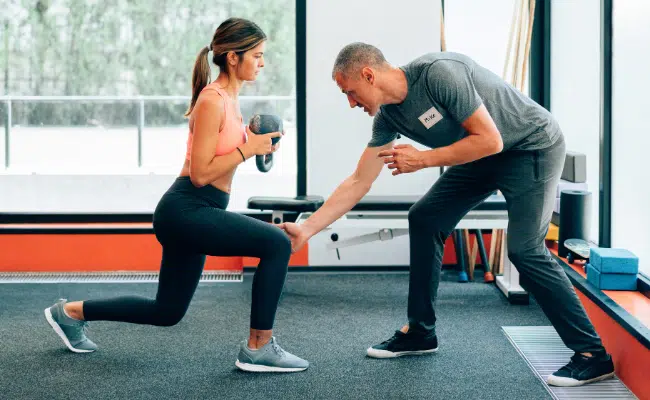
That’s where private coaching - in person or online - is often the fastest way to get started safely.
TECHNIQUE
Technique, in this context, is about how force moves through the body during basic human actions like running and striking.
This is rarely taught as a connected system, especially in a long-term maintenance context.
It’s one of the most overlooked aspects of physical longevity.
I’ll unpack this properly in a future piece - but it plays a much bigger role in staying capable than most people realise.
RECOVERY
Recovery isn’t just rest.
It’s the skill of unloading tension before it accumulates - and responding early when pain first appears.
My coaching focuses on practical recovery skills such as:
- breathwork
- shaking and flossing techniques
- targeted self-massage
- thermal exposure
These are tools you use regularly, not occasionally.
This might sound like a lot.
You don’t need to do everything at once.
You just need to start - then gradually build your practice over time.
Because if these four pillars aren’t maintained, decline doesn’t stop on its own.
It progresses.
Debilitation isn’t a matter of if - it’s a matter of when.
If this idea resonates, you can explore how to start your own Functional Maintenance Practice through my coaching or online community.
Here’s to ongoing care.
ALLAN LIANG